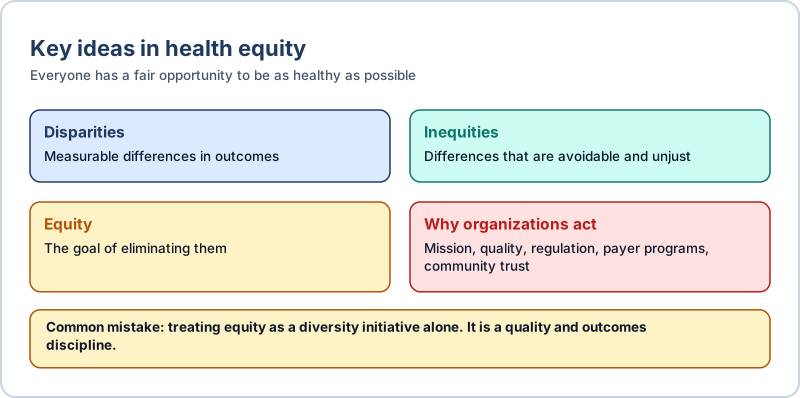
Health equity means everyone has a fair opportunity to be as healthy as possible. Consultants help organizations identify and remove the obstacles that stand in the way.
Key concepts
Disparities are measurable differences in outcomes; inequities are differences that are avoidable and unjust; equity is the goal of eliminating them.
Evidence
Documented differences in outcomes by race, ethnicity, income, geography, language, disability, sexual orientation and gender identity across many conditions.
Why organizations act
Mission, quality, regulatory and accreditation requirements, payer programs and community trust.
Common mistake
Treating equity as a diversity initiative alone. It is a quality and outcomes discipline with its own data and methods.
Key Takeaways
- Disparities are measurable differences in outcomes; inequities are differences that are avoidable and unjust; equity is the goal of eliminating them.
- Documented differences in outcomes by race, ethnicity, income, geography, language, disability, sexual orientation and gender identity across many conditions.
- Mission, quality, regulatory and accreditation requirements, payer programs and community trust.
Check Your Understanding
Before moving on, explain in your own words the most important point from “What Health Equity Means” and name one situation in your work or family where you would apply it, and who you would report to or ask if unsure.
Action Step
Write a plain-language definition of health equity for a hospital board and one example of an inequity in your region.
This course is educational only. It is not legal, regulatory, financial, tax or clinical advice, does not create a consultant-client or attorney-client relationship, and does not issue any license, certification or credential. Healthcare laws and regulations change frequently and vary by state; consult qualified healthcare counsel, compliance officers and licensed professionals before acting on any matter discussed here.