Healthcare organizations face many kinds of disputes. Recognizing them helps managers respond appropriately.
Categories
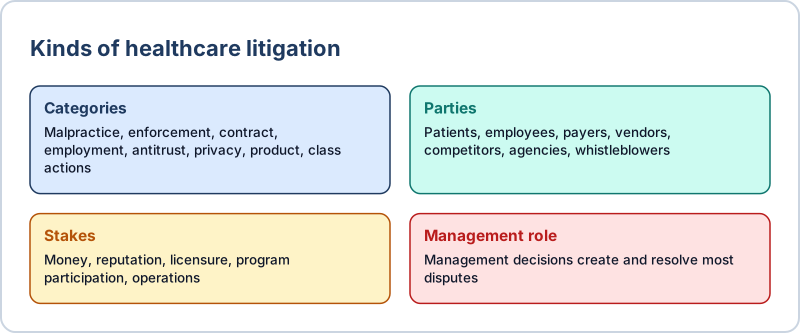
Medical malpractice, government enforcement, contract disputes, employment claims, antitrust, privacy breaches, product liability and class actions.
Parties
Patients, employees, payers, vendors, competitors, government agencies and whistleblowers.
Stakes
Money, reputation, licensure, program participation and operations.
Common mistake
Treating every dispute as a legal department problem. Management decisions create and resolve most disputes.
Worked Example
In one year a mid-sized hospital handles a malpractice suit over a delayed diagnosis, a government inquiry into inpatient admission practices, a dispute with a commercial payer over underpaid claims, a wage-and-hour class action by nursing staff, and a lawsuit from patients affected by a data breach. Each involves different managers — the chief medical officer, revenue cycle, human resources, information security — and different insurance coverage.
Key Takeaways
- Medical malpractice, government enforcement, contract disputes, employment claims, antitrust, privacy breaches, product liability and class actions.
- Patients, employees, payers, vendors, competitors, government agencies and whistleblowers.
- Money, reputation, licensure, program participation and operations.
Check Your Understanding
Before moving on, explain in your own words the most important point from “Types of Healthcare Litigation” and name one situation in your work or family where you would apply it, and who you would report to or ask if unsure.
Action Step
List five types of litigation a hypothetical hospital might face and the management function most involved in each.
This course is educational only. It is not legal, regulatory, financial, tax or clinical advice, does not create a consultant-client or attorney-client relationship, and does not issue any license, certification or credential. Healthcare laws and regulations change frequently and vary by state; consult qualified healthcare counsel, compliance officers and licensed professionals before acting on any matter discussed here.